Tuesday, August 10, 2021

All About Aluminum Die Casting Metals

Characteristics of Aluminum Alloy:

  • Provides outstanding corrosion resistance
  • Commendable thermal conductivity
  • Gives good strength and hardness
  • It has a very good strength-to-weight ratio
  • Can operate in high temperatures
  • Provides High electrical conductivity
  • Very light in weight

A good amount of benefits are provided to mechanical designers by heat dissipating properties, aluminum’s strength, and corrosion resistance. And even for more applications, proprietary thin Wall aluminum die casting tooling manufacturer has made aluminum die casting an option.

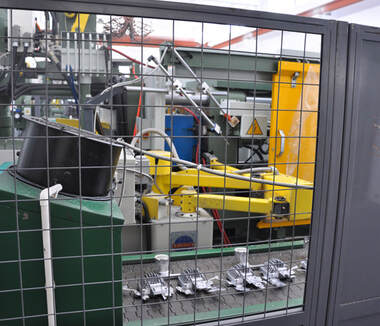
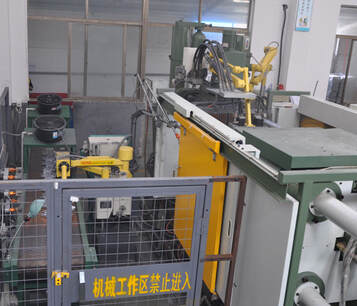
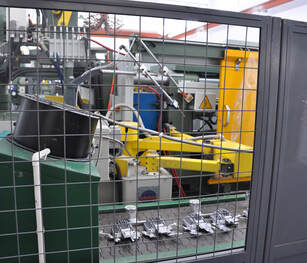
aluminum die casting tooling

Benefits of Aluminum Die Casting

As compared to other die cast alloys, aluminum die casting creates lighter parts that too with more surface finishing options, which is one of the most significant benefits. In all the die-cast alloys Aluminum can withstand the highest operating temperatures. However in almost any industry cast aluminum is versatile, corrosion-resistant; it retains high dimensional stability with thin walls and can be used.

Applications of Aluminum Die Casting:

  • In the telecom and computing industries, Aluminum is used in a broad range of networking and infrastructure equipment as RF filter boxes and housings need heat dissipation.
  • In handheld devices, aluminum castings need EMI/RFI shielding, rigidity, and durability with minimal weight
  • By contributing to weight-saving requirements aluminum die casting tooling china can improve automotive fuel efficiency.
  • For electronic connectors and housings, die-cast aluminum is ideal because of aluminum’s excellent electrical performance and shielding properties, even in high-temperature environments.

Recycling of Aluminum Die Castings

Between primary and secondary Recycling Aluminum Die Castings you will find a minute difference. By mixing and melting pure aluminum with other materials such as magnesium, iron, and copper secondary aluminum alloys are derived. Due to the cost of extraction, the use of pure aluminum in casting is very rare. For designers from nearly any industry, the ease of use in die casting is combined with lighter weight and its durability makes aluminum alloys a top choice.

Compared to primary aluminum, secondary aluminum is more economical to produce because it only needs 5 percent as much energy to produce. For heating and re-melting the metal during fabrication, most of the energy consumption is used in aluminum die casting. The aluminum die casting tooling is very reliable. Follow us on Facebook

Tuesday, August 3, 2021

Process of Zinc Die Casting and its Benefits

For the manufacturing of accurate, complex, strong, and intricately shaped metal components, zinc high pressure diecasting with its alloys is one of the most efficient and versatile high-production methods used.

The process is performed in an automatic machine that can withstand high pressure. By a hydraulically actuated plunger, the molten metal is pushed into two-piece steel die that contains one or more cavities, each an exact inverse replica of the part or parts being produced.

Zinc High Pressure Die Casting

Process of Zinc Die Casting

In an automatic machine that can withstand high pressure, the zinc high pressure die casting process is carried out. To two-piece steel die containing one or more cavities, each an exact inverse replica of the part or parts the molten metal is pushed. To other casting processes the mechanical properties of pressure zinc die castings are superior because of the quick chill and rapid solidification that occurs when the molten metal comes in contact with the cool side of the steel.

Benefits of Zinc Die Casting

When we talk regarding the benefits of zinc die casting you will find that in terms of production time other casting processes can’t be compared to zinc. To economically manufacture cast parts of whatever size and quantity required a variety of casting processes are available.

Zinc High Pressure Die Casting Process

However when compared with aluminum or magnesium die casting, production rates for zinc are much faster. Also, compared to any other metal or molded plastic, zinc alloys have the ability to cast in closer tolerances. The same net shape performance and eliminate machining are achieved by only a few other processes like aluminum die casting. As compared to other casting processes, the mechanical properties of pressure zinc die castings are superior.

One more major benefit of using zinc pressure die casting is that zinc’s superior casting stiffness, fluidity, and strength allows the design of thin wall sections for reduced weight and material cost savings. There are many corporations that handle all aspects of zinc alloy die-casting starting from mold design and testing to zinc component manufacturing, finishing, and packaging. As zinc has excellent bearing and wears properties so it allows greater design flexibility and reduces fabrication costs. Follow us on Twitter

Methods Implemented for Cost Reduction in Zinc Die Castings

Zinc die casting is commonly supplied as pressure die castings. The thermal distortions of both die and casting are the least of any of the casting processes as the casting temperatures are low that for the die and minor contraction problems for the casting creates low expansion problems; from steel, the dies are accurately machined. Thus zinc pressure die castings are capable of meeting many net shape requirements.

In molds of all types, the light alloys based on magnesium and aluminum can be cast. For HPDC, the dies are steel and there is no use of a protective coat as a result it maximizes accuracy. The die casts iron or steel for low pressure and gravity die castings but is protected by a ceramic die coat.

Zinc die casting

In zinc die casting services, being executed without affecting the quality and functionality of the component that is produced, cost-reduction is an activity. All the activities that have the aim to simplify production processes, increase productivity, and diminish scrap rate as well as the choices of materials and processing, are cost reduction strategies.

In different ways, you can implement the cost reduction in zinc die casting. Zinc is a versatile metal that when manufactured with the right technologies, allows saving not only in absolute terms, as it allows the die caster to save the raw materials, time, and energy that are needed in the process but also compared to other metals.

Zinc Die Casting

In the production of die-casts, you can implement cost reduction by:

  • During the die casting process when it comes to saving it is also important to choose the right die caster
  • Optimization of the productive process
  • With the customer through co-design methods designing processes and components together

Selecting zinc instead of other metals or other metal alloys

In the die casting process, Zinc alloys have employed some properties that when compared to other metals make them competitive. These are few chemical-physical properties that allow the reduction of costs related to production processes and the subsequent stages, such as, for example, those of disposal and recycling and are also used by zinc die casting manufacturer. Follow us on Facebook

Friday, July 30, 2021

Comparing Aluminum Casting Method with Other Methods

For producing metal parts Aluminum is a great material, no matter whether you have an entirely new product or when its demand is rising it has a need to produce more of an existing product. However, with every method of aluminum die casting method, the result is different. Each method has its limitations and possibilities, which is why there is a need to compared different methods with each other. In this way, for your production needs, you can choose the most suitable casting method.

Based on your production volumes how to select the aluminum casting method

Production volume is the most important consideration for aluminum die casting China. Your products will be of desired quality with the right casting method in terms of mechanical strength, surface quality, thermal and electrical conductivity, dimensional accuracy, costs of production and tooling, as well as delivery time. However depending on the requirements and the budget for your product you can make the annual production volume with each method.

Aluminum Die Casting

Aluminum sand casting: Cost-efficient, small-volume production, and prototyping

For low production volumes as well as prototyping sand casting method is used. To produce all sizes castings with low tooling costs, molten aluminum is poured into a resin-bonded sand mold. On one hand, this method might be the fastest method for casting but it depends on the type of product. On the other hand, to respond to urgent demand the delivery time might be too long, and it depends on your product and the workload of your casting partner. This casting method has low dimensional accuracy so it will not produce very complex products.

Benefits of Sand casting

  • Due to low tooling costs, it is cost-efficient
  • Best for castings of all sizes
  • In aluminum components, low pressure die casting enables a high level of solidity and low porosity
  • For prototyping or small quantities of a product, it is good.
Aluminum Die Casting

Low-pressure aluminum die casting process is a cost-effective method, in which with molten aluminum pushed upwards to the die through a tube with low pressure the mold is filled up slowly. This results in a high level of solidity and low porosity for your product. Follow us on Facebook

Hurdles in Aluminum High-Pressure Die Casting Process

This article depicts about the dedication to the developments and alterations in the industry of aluminum high pressure diecasting. This chapter deals with new technologies, as one of the four challenges, and productivity improvements.

Technological developments are absolutely required because of the serious changes in the area of the product portfolio, as well as the increased pressure of cost optimization. 

The requirements that define this for the foundries are huge. The situation gives no room to move with respect to time. Simultaneously at short notice, new products must be designed and industrialized, as well as new processes developed or at least further developed.

High demand for foundry in the short term, expertise, and financial resources is required. It is needed in the medium term. This can result in the following relevant short-term fields of action:

  • Heat treatment
  • Vacuum die casting
  • Minimal lubrication
  • Salt cores
  • Alloy development

The additive manufacturing process (currently only interesting for prototype development)

Technology roadmaps have to be created and prioritized depending on the long-term corporate strategy and the individual know-how level of the foundries.

You can save time, money, and resources by having partnerships with customers, suppliers, universities as well as market companions, and make the necessary difference at the end of the day.This the article depicts the dedication to the developments and alterations in the industry of aluminum high pressure die casting. This chapter deals with new technologies, as one of the four challenges, and productivity improvements.

aluminum high pressure die casting

Technological developments are absolutely required because of the serious changes in the area of the product portfolio, as well as the increased pressure of cost optimization.

The requirements that define this for the foundries are huge. The situation gives no room to move with respect to time. Simultaneously at short notice, new products must be designed and industrialized, as well as new processes developed or at least further developed.

High demand for foundry in the short term, expertise, and financial resources is required. It is needed in the medium term. This can result in the following relevant short-term fields of action:

  • Heat treatment
  • Vacuum die casting
  • Minimal lubrication
  • Salt cores
  • Alloy development

The additive manufacturing process (currently only interesting for prototype development)

Technology roadmaps have to be created and prioritized depending on the long-term corporate strategy and the individual know-how level of the foundries.

You can save time, money, and resources by having partnerships with customers, suppliers, universities as well as market companions, and make the necessary difference at the end of the day.

In the aluminum high pressure die casting process, porosity causes costly scrap loss and in critical high-strength applications, it limits the use of die-cast parts. To the die casting process parameters, the amount of porosity is closely related. Consequently, in relation to die casting parameters the mechanisms of porosity formation needs to be studied in detail. The requirements that define this for the foundries are huge.

Salt Core Technology

For a long time, salt core technology has been around. However, the right breakthrough has so far failed. A promising future application was the closed-deck cylinder crankcases were considered for a long time. However, for this application e-mobility, there will be a limitation in the cost development.

aluminum high pressure die casting

In the aluminum high pressure die casting process, porosity causes costly scrap loss and in critical high-strength applications, it limits the use of die-cast parts. To the die casting process parameters, the amount of porosity is closely related. Consequently, in relation to die casting parameters the mechanisms of porosity formation needs to be studied in detail. The requirements that define this for the foundries are huge.

Salt Core Technology

For a long time, salt core technology has been around. However, the right breakthrough has so far failed. A promising future application was the closed-deck cylinder crankcases were considered for a long time. However, for this application e-mobility, there will be a limitation in the cost development.

However, for these parts, current technology advancement is unlikely due to other key issues and also because of aluminum high pressure die casting machines. Follow us on Facebook

Wednesday, June 9, 2021

Learn the Process of High Pressure Die Casting


Used for the production of various product forms, aluminum high pressure die casting is an efficient manufacturing method. It produces with extremely fast casting possibilities coupled with a process of high-pressure injection.
For parts of various sizes and shapes, high-pressure die casting is a process of high volume manufacturing. You must be aware of few aspects of the method. Within several milliseconds the casting of a molten alloy into a mold is completed. However, it is possible to do a significant quenching effect with high production rates. Between molten alloy and die wall the application of aluminum high pressure die casting machines, enables good contact that eventually results in: the heat transfer coefficient at the die-melt interface, the elevation in cooling rate.
There is a reduction in the casting defects such as shrink holes that are generated by the shrinkage during solidification. From a liquid state components with complicated shapes are produced directly even for a molten alloy with high viscosity. By taking these facts into account, in various alloy systems by the high-pressure die casting process it is expected that much larger shapes and dimensions can be formed.

Characteristics of the HPDC process include the high velocity of melt during filling the die and the high solidification rate of the component. During the HPDC process, such circumstances demand a more sophisticated approach to the study of phenomena.

For the production of complex, thin-walled near net shape castings, aluminum high pressure die casting china is a fully automatic, large volume, high productivity process. In the production of housings etc., it has been traditionally utilized, but this has now changed. Presently, in magnesium alloys and B-pillars in aluminum alloys, feasible products are automotive front-end structures and instrument panels.
Aluminum, zinc, magnesium, and copper-based alloys are the four principal metals, with different alloy compositions, that are commonly hot- or cold chamber die cast. Into the melt, there is the immersion of the injection system in the hot chamber machines and therefore there is a limitation in its pressure. In the cold chamber process, from the injection system, the metal reservoir is separated. Follow us on Facebook

Thursday, June 3, 2021

Everything You Need to Know About Die Casting

In movable typing machines, there are requirements of a large number of letters, punctuation marks, and more, all in single units. But all thanks to aluminum die casting because of which manufacturers sped up the creation of these individual elements and provided help in maintaining uniform sizes. For early printing machines, this advancement in manufacturing technology helped reduce errors and setup times.

Evolution of Die Casting

The first die casting equipment was a hand-operated and small machine. In 1838, it was invented and in 1849, got its patent. It is a combination of tin and lead that was first melted and then poured into a steel mold which was referred to as the die. The metal took the shape of the mold and gets solidified after the cooling of the alloy. This final element that was taken from the mold is referred to as a casting.

aluminum die casting process

During the first 30 years, the printer’s aluminum die casting process only served to help create type. But in the starting of early 1890s, in a variety of different shapes more dies were created.

In almost every major industry the entries of die casting were allowed by new molds and provided parts for the machinery that was powering the country.

Growth under Pressure

After the introduction of new alloys, the die casting process had a total makeover to accommodate new needs and new parts creation. In the early days, for consistent production of quality products die casting machinery could only produce a low-pressure injection system. Our machines were developed because of the improvements in the strength and heat resistance of the materials.

Because of the improvement in equipment and manufacturing capabilities, new methods were established that under moderate pressure were operated and allowed for more flexibility of the shapes crafted. For complex shapes machinery has been designed to include moving parts and plates.

Now a day aluminum die casting china method typically provides a better quality product and a strong finish and has become the standard. In today’s machinery, the die-casted parts created are delivered in extremely high volumes, are strong, have an excellent surface finish.

Get to Know about Direct Investment Casting

Using a ceramic shell built over a wax pattern, Investment casting like aluminum investment casting china is a metal working process to pro...