Showing posts with label Aluminum Die Casting. Show all posts

Monday, December 20, 2021

Get to Know More about the Aluminum Die Casting

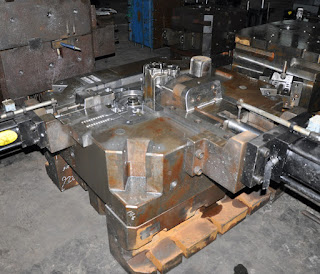
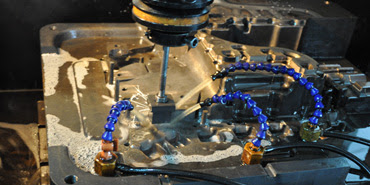
Forcing molten metal into a mold, Die casting like aluminum die casting china is a high pressure metal casting process. With a high quality finish, dimensionally accurate precision metal parts are produced by it. Making it perfect for the mass production of products, its ability to produce detailed parts is high. From non-ferrous metals such as tin, copper, zinc, magnesium, aluminum, pewter, and lead, Die castings are made.
aluminum die casting china

Cold or hot chambers are the two methods of die casting. On the type of the part and metal, the process that is used depends. With metals that have a high melting point like alloys of copper, brass, or aluminum, the cold chamber method is used. To metals that won‘t dissolve on being heated, Hot chamber die casting is limited. These metals include magnesium, lead, and zinc alloys.

Offering a broad range of components and shapes, the die casting process used by aluminum die casting manufacturer is economical and efficient. To be visually appealing, Parts produced can be produced and have a long life. They offer designers remarkable benefits.

Complex shapes with close tolerances are produced by the high speed of die casting produces requiring no after production processing. Additional shaping or tooling is not required at all. With high tensile strength, Final parts are heat resistant.

aluminum die casting china

The presence of iron within the alloys is one of the reasons for the limited ductility of aluminum die casting alloys. To minimize soldering (sticking) of the castings to the uncoated and unprotected steel die, the iron is added which occurs with die casting due to the high injection speed used. Its final use determines the kind of metal used in die cast. For truck and automobile parts, Aluminum is used due to its corrosion resistance and light weight, while stainless steel is sued to make medical instruments.

After and during the melting process, Metals for casting must maintain their characteristics and properties. The kinds include:

  • Zinc
  • Aluminum
  • Bronze
  • Brass
  • Lead
  • Tin
  • Silicon tombac
  • Magnesium
  • Carbon steel
  • Stainless steel

Benefits

As it takes very little energy to melt, Aluminum is cost effective for aluminum die casting. It is resistant to corrosion and rust. It is lightweight. It accepts surface finishes, conductivity, ensures dimensional stability, and strength at high temperatures. It is also durable and long lasting. Follow us on Twitter

Saturday, October 23, 2021

Characteristics and Applications of Aluminum Die Casting Metals

The casting done with Aluminum die casting mold sustains the highest temperatures of operating as compared to all die-cast alloys and it is very lightweight.

Characteristics of Aluminum Alloy:

  • Provides good stiffness and strength-to-weight ratio
  • Exhibits Good finishing characteristics
  • Provides resistance from corrosion
  • Quite light in weight
  • Operates on high temperatures
  • Has good strength and hardness
  • It is fully recyclable
  • Has excellent thermal conductivity
  • Provides High electrical conductivity

Mechanical designers are bombarded with significant benefits because of aluminum’s strength, corrosion resistance, and heat-dissipating properties.

Benefits of Aluminum Die Casting

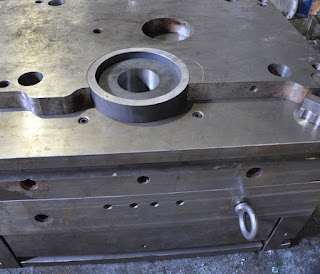
One important benefit that aluminum die casting offers is that when compared to other die cast alloys it creates lighter parts that too with more surface finishing options. Aluminum operates at the highest temperatures of all the die-cast alloys. So, cast aluminum retains high dimensional stability with thin walls, is versatile, corrosion-resistant, and can be used by any aluminum die casting mold manufacturer.

aluminum die casting mold china

Applications of Aluminum Die Casting:

Aluminum castings provide their contribution to weight-saving requirements as a result they improved automotive fuel efficiency.

In the telecom and computing industries, aluminum is used in a broad range of networking and infrastructure equipment as there is a requirement of heat dissipation by the RF filter boxes and housings. For housings and electronic connectors, an ideal option is Die-cast aluminum as the best electrical shielding properties and performance is offered by aluminum even in high-temperature.

aluminum die casting mold china

Recycling of Aluminum Die Castings

Between primary and secondary recycling aluminum die casting, you will see very little functional difference. The use of pure aluminum in casting is quite rare and is due to its cost of extraction. For designers from any industry, aluminum diecasting mold china is their topmost choice because of its ease of use in die casting combined with lighter weight and durability.

Compared to primary aluminum, secondary aluminum is more economical for the production process because it needs only 5 percent as much energy for production. To heat and re-melt the metal die-casting maximum energy consumption is used during fabrication in aluminum.

Find the best aluminum die casting mold manufacturer online to get the best deal. Follow us on Twitter

Thursday, September 23, 2021

Low-Pressure Die Casting and its Benefits

Low-Pressure Die Casting

Aluminum low pressure die casting is a method that fills molds with molten metal such as aluminum and magnesium utilizes pressure rather than gravity. In this particular process, below the cast, the holding furnace is located and through a riser tube, the liquid metal is forced upwards and then into the cavity. 

Constantly the pressure is applied. The pressure is released once the cast has solidified and any residual liquid present in the tube or cavity flows back into the holding furnace for recycling purposes. The cast is simply removed when it gets cooled. Into a sealed furnace holding a tank of molten metal low-pressure air is introduced.

aluminum low pressure die casting process

Benefits of Low-Pressure Die Casting

This aluminum low pressure die castingprocess allows having precise control of the filling process. In this way, if the molten metal is injected then it reduces oxide formation and reduces porosity, ensuring superior consistency from top to bottom. This method is however greatly suited to simpler, symmetrical forms, but with the use of sand cores within the molds more complex geometries can be achieved.

The low-pressure die casting process lends itself well to automation with the advantage of uncomplicated machinery and technology. In this particular process, below the cast, the holding furnace is located and through a riser tube, the liquid metal is forced upwards and then into the cavity. Constantly the pressure is applied.

aluminum low pressure die casting process

Alternatives

You will find various alternatives to low-pressure casting. The high-heat properties of sand make this a highly exceptional method of molding. Another option you will find is investment casting. Gravity casting (or permanent mold casting) is another alternative to low-pressure casting.The strength to weight ratio is quite superior. Forging is always porosity free unlike some casting processes as a result it allows relatively straightforward heat treatment processes that highly improve selected mechanical characteristics.  

It is a simple process of filling hollow forms with molten metal and allowing gravity to flow into every recess of the mold. Gravity casting offers several benefits such as faster production times, smooth surfaces, and superb dimensional accuracy. You will find different aluminum low pressure die casting manufacturer near you.

Friday, July 30, 2021

Comparing Aluminum Casting Method with Other Methods

For producing metal parts Aluminum is a great material, no matter whether you have an entirely new product or when its demand is rising it has a need to produce more of an existing product. However, with every method of aluminum die casting method, the result is different. Each method has its limitations and possibilities, which is why there is a need to compared different methods with each other. In this way, for your production needs, you can choose the most suitable casting method.

Based on your production volumes how to select the aluminum casting method

Production volume is the most important consideration for aluminum die casting China. Your products will be of desired quality with the right casting method in terms of mechanical strength, surface quality, thermal and electrical conductivity, dimensional accuracy, costs of production and tooling, as well as delivery time. However depending on the requirements and the budget for your product you can make the annual production volume with each method.

Aluminum Die Casting

Aluminum sand casting: Cost-efficient, small-volume production, and prototyping

For low production volumes as well as prototyping sand casting method is used. To produce all sizes castings with low tooling costs, molten aluminum is poured into a resin-bonded sand mold. On one hand, this method might be the fastest method for casting but it depends on the type of product. On the other hand, to respond to urgent demand the delivery time might be too long, and it depends on your product and the workload of your casting partner. This casting method has low dimensional accuracy so it will not produce very complex products.

Benefits of Sand casting

  • Due to low tooling costs, it is cost-efficient
  • Best for castings of all sizes
  • In aluminum components, low pressure die casting enables a high level of solidity and low porosity
  • For prototyping or small quantities of a product, it is good.
Aluminum Die Casting

Low-pressure aluminum die casting process is a cost-effective method, in which with molten aluminum pushed upwards to the die through a tube with low pressure the mold is filled up slowly. This results in a high level of solidity and low porosity for your product. Follow us on Facebook

Monday, March 15, 2021

You Need to Expand Your Knowledge About Gravity Die Casting

Compared to other metal casting processes, aluminum die casting produces a higher volume of parts per year than any other and it is a process in which through hydraulic or pneumatic pressure molten metal is forced into a steel mold before cooling and creating a final product.

The process benefits accommodate seemingly paradoxical needs and are wide-ranging: lightweight but stiff, consistent, ductile but strong, long-lasting, and versatile. Furthermore, for die casting the number of different alloys suitable is impressive. In the process not only are lead and tin still used, but aluminum, copper, magnesium, and zinc are all commonly used now.

aluminum die casting

A repeatable casting process is Gravity Die Casting and it is also referred to as permanent mold. For non-ferrous alloy parts, typically aluminum, zinc, and copper-base alloys and they are, it is used. The process differs from high-pressure die casting as to fill the mold with the liquid alloy there is the use of high pressure instead of gravity.

The parts of GDC are made of heavier sections than HPDC, but thinner sections than sand casting and it typically suits medium to high volumes products.

In this process there are three key stages:

With the help of a die release agent, the heated mold is coated in aluminum die casting services. A secondary function is played by the release agent especially in which after the previous part has been removed from the die.

To allow the material to fill all the extremities of the mold cavity molten alloy is poured into channels of the tool. Using steel ladles the alloy is either hand poured or using mechanical methods it is dosed. Typically, you will find a mold, down the sprue that from the lower part of the die allows the alloy to enter the mold cavity, reducing the formation of turbulence.

Aluminum Die Casting

The die is opened, either manually or utilizing mechanical methods once the part has cooled sufficiently.

Advantages of Gravity aluminum die casting china

  • Compared to sand casting thinner walls can be cast
  • Dimensional accuracy is quite good
  • Compared to sand casting you will find improved mechanical properties

Smoother cast surface finish than sand casting

Follow us on Twitter

Friday, November 27, 2020

Why Temperature is Important in Die Casting

If you want to avoid die casting defects and other problems then die casting temperature control is a real issue. When it comes to temperature and the consequences of poor temperature control while die casting like Aluminum Die Casting, it becomes necessary to understand the difference between metals.

Aluminum Die Casting Manufacturer

Temperature Effects on Aluminum Die Casting

For metal die casting Aluminum is one of the most popular choices. It has good corrosion resistance, is lightweight and durable. For die casting the most popular aluminum alloys are 360, 380 and 413.

For example, for Aluminum 380, you’ll see a tensile strength of 48 at 75 degrees and yield strength of 24. Yield strengths range from 41 KSI down to 18 KSI for 500 degree in case of Aluminum Die Casting Process 390.

How Thermal Factors affect Die Casting

In die casting the thermal factors are the temperature of the die casting machine, the temperature of the alloy used for casting and the temperature of the die itself. For the highest-quality parts all of these factors must be kept in an optimum temperature range.

Temperature Needed for Die Casting

If you don’t want to put a strain on the mold, then you definitely want the alloy to be about 50 to 70 degrees F higher than the initial crystallization temperature. At about a third of the alloy temperature the mold itself needs to be maintained. It is quite complex to calculate the correct temperature for the casting chamber and it needs to be determined by the casting engineer.

Effects of Temperature in Die Casting


Aluminum Die Casting Manufacturer

In general, in die casted alloys from Aluminum Die Casting Manufacturer as temperatures increase, tensile and yield strengths decrease. You need to keep this fact in your mind if you need parts with high tensile strength. Along with this, with the increase in temperature ductility increases, but changes rely on the type of alloy being die casted. For example, aluminum is less ductile than zinc, but in the process temperature must be higher for aluminum.

Get to Know about Direct Investment Casting

Using a ceramic shell built over a wax pattern, Investment casting like aluminum investment casting china is a metal working process to pro...