Showing posts with label INNOVAW. Show all posts

Monday, December 20, 2021

Get to Know More about the Aluminum Die Casting

Forcing molten metal into a mold, Die casting like aluminum die casting china is a high pressure metal casting process. With a high quality finish, dimensionally accurate precision metal parts are produced by it. Making it perfect for the mass production of products, its ability to produce detailed parts is high. From non-ferrous metals such as tin, copper, zinc, magnesium, aluminum, pewter, and lead, Die castings are made.
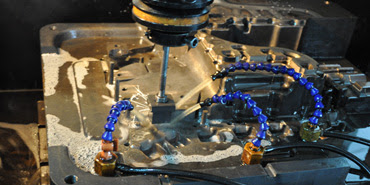
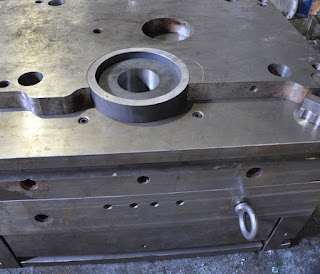
aluminum die casting china

Cold or hot chambers are the two methods of die casting. On the type of the part and metal, the process that is used depends. With metals that have a high melting point like alloys of copper, brass, or aluminum, the cold chamber method is used. To metals that won‘t dissolve on being heated, Hot chamber die casting is limited. These metals include magnesium, lead, and zinc alloys.

Offering a broad range of components and shapes, the die casting process used by aluminum die casting manufacturer is economical and efficient. To be visually appealing, Parts produced can be produced and have a long life. They offer designers remarkable benefits.

Complex shapes with close tolerances are produced by the high speed of die casting produces requiring no after production processing. Additional shaping or tooling is not required at all. With high tensile strength, Final parts are heat resistant.

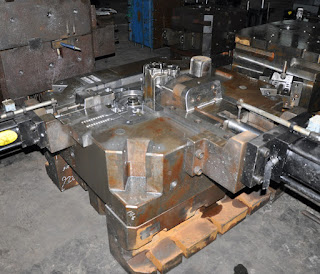
aluminum die casting china

The presence of iron within the alloys is one of the reasons for the limited ductility of aluminum die casting alloys. To minimize soldering (sticking) of the castings to the uncoated and unprotected steel die, the iron is added which occurs with die casting due to the high injection speed used. Its final use determines the kind of metal used in die cast. For truck and automobile parts, Aluminum is used due to its corrosion resistance and light weight, while stainless steel is sued to make medical instruments.

After and during the melting process, Metals for casting must maintain their characteristics and properties. The kinds include:

  • Zinc
  • Aluminum
  • Bronze
  • Brass
  • Lead
  • Tin
  • Silicon tombac
  • Magnesium
  • Carbon steel
  • Stainless steel

Benefits

As it takes very little energy to melt, Aluminum is cost effective for aluminum die casting. It is resistant to corrosion and rust. It is lightweight. It accepts surface finishes, conductivity, ensures dimensional stability, and strength at high temperatures. It is also durable and long lasting. Follow us on Twitter

Wednesday, December 1, 2021

Gravity Die Casting and its Advantages

We use the method of gravity casting China in manufacturing casting parts from non-ferrous materials such as aluminum or low-temperature alloys. For a wide range of industrial applications in the defense, medical and energy sectors the process is used to create intricately shaped components. It involves pouring molten metal into a pre-formed cast iron block which is fully machined to produce the die under the force of gravity.

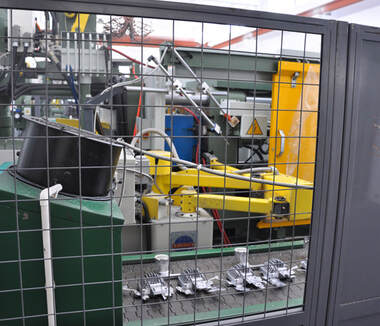
gravity casting

Gravity die casting is a form of die casting that is a great option for creating repeatable medium- and high-volume parts. We refer to this process as permanent mold. Compared to high-pressure die casting it is quite different and is used for parts that have higher structural requirements, are slightly heavier, and larger.

In manufacturing, gravity die casting is an effective and versatile means of quickly creating parts. In the case of other forms of die casting, with the help of a mold cavity molten metal is formed into a shape. In producing the same part this method allows a single set of dies to be reused indefinitely. This is fortunate as the cost of the metal dies and casting machinery can be very high. Because of their excellent surface finish and strength gravity casting manufacturer make use of this technique.

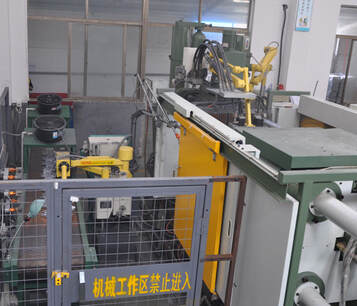
gravity casting manufacturer

Here we will look at the process and the advantages of this technique.

In gravity die casting there are four main steps involved. At first, the two halves of the die are heated and sprayed with a coating before being clamped together.

Premature solidification is prevented with the help of lubrication and it also helps in the removal of the casting.

Into the cavity of the die, the pouring of the molten metal is done. Before it is allowed to cool the metal solidifies at a rapid rate. At last, the die is opened and the removal of cast parts is done.

Compared to equivalent manufacturing processes there are various key benefits which include:

  • It offers excellent durability and dimensional stability.
  • versatility – we can engineer complex and simple shapes
  • high production rates - in a single day many hundreds of castings can be produced
  • It helps in the production of smooth or textured surfaces.
  • Gravity casting process provides higher tensile strength and improved mechanical properties when compared with sand casting.
Follow us on Twitter

Saturday, October 23, 2021

Characteristics and Applications of Aluminum Die Casting Metals

The casting done with Aluminum die casting mold sustains the highest temperatures of operating as compared to all die-cast alloys and it is very lightweight.

Characteristics of Aluminum Alloy:

  • Provides good stiffness and strength-to-weight ratio
  • Exhibits Good finishing characteristics
  • Provides resistance from corrosion
  • Quite light in weight
  • Operates on high temperatures
  • Has good strength and hardness
  • It is fully recyclable
  • Has excellent thermal conductivity
  • Provides High electrical conductivity

Mechanical designers are bombarded with significant benefits because of aluminum’s strength, corrosion resistance, and heat-dissipating properties.

Benefits of Aluminum Die Casting

One important benefit that aluminum die casting offers is that when compared to other die cast alloys it creates lighter parts that too with more surface finishing options. Aluminum operates at the highest temperatures of all the die-cast alloys. So, cast aluminum retains high dimensional stability with thin walls, is versatile, corrosion-resistant, and can be used by any aluminum die casting mold manufacturer.

aluminum die casting mold china

Applications of Aluminum Die Casting:

Aluminum castings provide their contribution to weight-saving requirements as a result they improved automotive fuel efficiency.

In the telecom and computing industries, aluminum is used in a broad range of networking and infrastructure equipment as there is a requirement of heat dissipation by the RF filter boxes and housings. For housings and electronic connectors, an ideal option is Die-cast aluminum as the best electrical shielding properties and performance is offered by aluminum even in high-temperature.

aluminum die casting mold china

Recycling of Aluminum Die Castings

Between primary and secondary recycling aluminum die casting, you will see very little functional difference. The use of pure aluminum in casting is quite rare and is due to its cost of extraction. For designers from any industry, aluminum diecasting mold china is their topmost choice because of its ease of use in die casting combined with lighter weight and durability.

Compared to primary aluminum, secondary aluminum is more economical for the production process because it needs only 5 percent as much energy for production. To heat and re-melt the metal die-casting maximum energy consumption is used during fabrication in aluminum.

Find the best aluminum die casting mold manufacturer online to get the best deal. Follow us on Twitter

Wednesday, June 9, 2021

Learn the Process of High Pressure Die Casting


Used for the production of various product forms, aluminum high pressure die casting is an efficient manufacturing method. It produces with extremely fast casting possibilities coupled with a process of high-pressure injection.
For parts of various sizes and shapes, high-pressure die casting is a process of high volume manufacturing. You must be aware of few aspects of the method. Within several milliseconds the casting of a molten alloy into a mold is completed. However, it is possible to do a significant quenching effect with high production rates. Between molten alloy and die wall the application of aluminum high pressure die casting machines, enables good contact that eventually results in: the heat transfer coefficient at the die-melt interface, the elevation in cooling rate.
There is a reduction in the casting defects such as shrink holes that are generated by the shrinkage during solidification. From a liquid state components with complicated shapes are produced directly even for a molten alloy with high viscosity. By taking these facts into account, in various alloy systems by the high-pressure die casting process it is expected that much larger shapes and dimensions can be formed.

Characteristics of the HPDC process include the high velocity of melt during filling the die and the high solidification rate of the component. During the HPDC process, such circumstances demand a more sophisticated approach to the study of phenomena.

For the production of complex, thin-walled near net shape castings, aluminum high pressure die casting china is a fully automatic, large volume, high productivity process. In the production of housings etc., it has been traditionally utilized, but this has now changed. Presently, in magnesium alloys and B-pillars in aluminum alloys, feasible products are automotive front-end structures and instrument panels.
Aluminum, zinc, magnesium, and copper-based alloys are the four principal metals, with different alloy compositions, that are commonly hot- or cold chamber die cast. Into the melt, there is the immersion of the injection system in the hot chamber machines and therefore there is a limitation in its pressure. In the cold chamber process, from the injection system, the metal reservoir is separated. Follow us on Facebook

Thursday, June 3, 2021

Everything You Need to Know About Die Casting

In movable typing machines, there are requirements of a large number of letters, punctuation marks, and more, all in single units. But all thanks to aluminum die casting because of which manufacturers sped up the creation of these individual elements and provided help in maintaining uniform sizes. For early printing machines, this advancement in manufacturing technology helped reduce errors and setup times.

Evolution of Die Casting

The first die casting equipment was a hand-operated and small machine. In 1838, it was invented and in 1849, got its patent. It is a combination of tin and lead that was first melted and then poured into a steel mold which was referred to as the die. The metal took the shape of the mold and gets solidified after the cooling of the alloy. This final element that was taken from the mold is referred to as a casting.

aluminum die casting process

During the first 30 years, the printer’s aluminum die casting process only served to help create type. But in the starting of early 1890s, in a variety of different shapes more dies were created.

In almost every major industry the entries of die casting were allowed by new molds and provided parts for the machinery that was powering the country.

Growth under Pressure

After the introduction of new alloys, the die casting process had a total makeover to accommodate new needs and new parts creation. In the early days, for consistent production of quality products die casting machinery could only produce a low-pressure injection system. Our machines were developed because of the improvements in the strength and heat resistance of the materials.

Because of the improvement in equipment and manufacturing capabilities, new methods were established that under moderate pressure were operated and allowed for more flexibility of the shapes crafted. For complex shapes machinery has been designed to include moving parts and plates.

Now a day aluminum die casting china method typically provides a better quality product and a strong finish and has become the standard. In today’s machinery, the die-casted parts created are delivered in extremely high volumes, are strong, have an excellent surface finish.

Wednesday, December 16, 2020

Benefits of Forged Aluminum for Many Applications

In recent widespread publicity on the increasing use of light metals in the transport sector replacing steel has however in a wide range of applications has overlooked the tried and proven technology of aluminum forging. While considering fabrication options available to the designer, it is clear that some of the emerging casting technologies deserve close examination however at low cost the characteristics of a relatively simple forged design often provide the desired weight + strength.

aluminum forging

Surface Finish

from very sharp serrations to relatively smooth surfaces, with forging a wide range of surface finishes can be produced and this may be a functional attribute of the part design or facilitate further surface finishing. Some alloys, like 6061, without any further surface treatment at all have desirable anti-corrosion characteristics.

Cost

In applications from the functional perspective where several fabrication options are viable, cost will be a major driver. Generally forging tooling is quite cheaper, for example, high-pressure die cast tooling, and the production rate is higher. To provide desirable heat treatable characteristics, offsetting this is generally higher raw material costs, associated with the necessary alloying of raw materials. Consequently, in highly stressed applications many aluminum forging process are used, although this is not always the case.

aluminum forging process

Strength

The light (SG=2.7) and common aluminium alloys when forged and heat treated exhibit some mechanical properties that is comparable with many grades of steel. Therefore the strength to weight ratio is far superior.

Forging is always porosity free unlike some casting processes from aluminum forging manufacturer thus allowing relatively straight forward heat treatment processes that significantly improve selected mechanical characteristics. Typical values of 310MPa is attained by lower cost 6061,which is also superior to, for example, A356 (or 601 types) Al casting alloy whether that alloy is semi-solid cast, squeeze cast or gravity cast. With 6061 aluminium, further fabrication by welding is also available hence opening the opportunities for many other applications.

Get to Know about Direct Investment Casting

Using a ceramic shell built over a wax pattern, Investment casting like aluminum investment casting china is a metal working process to pro...